


The Ultimate Guide to Fleet Preventative Maintenance in 2026
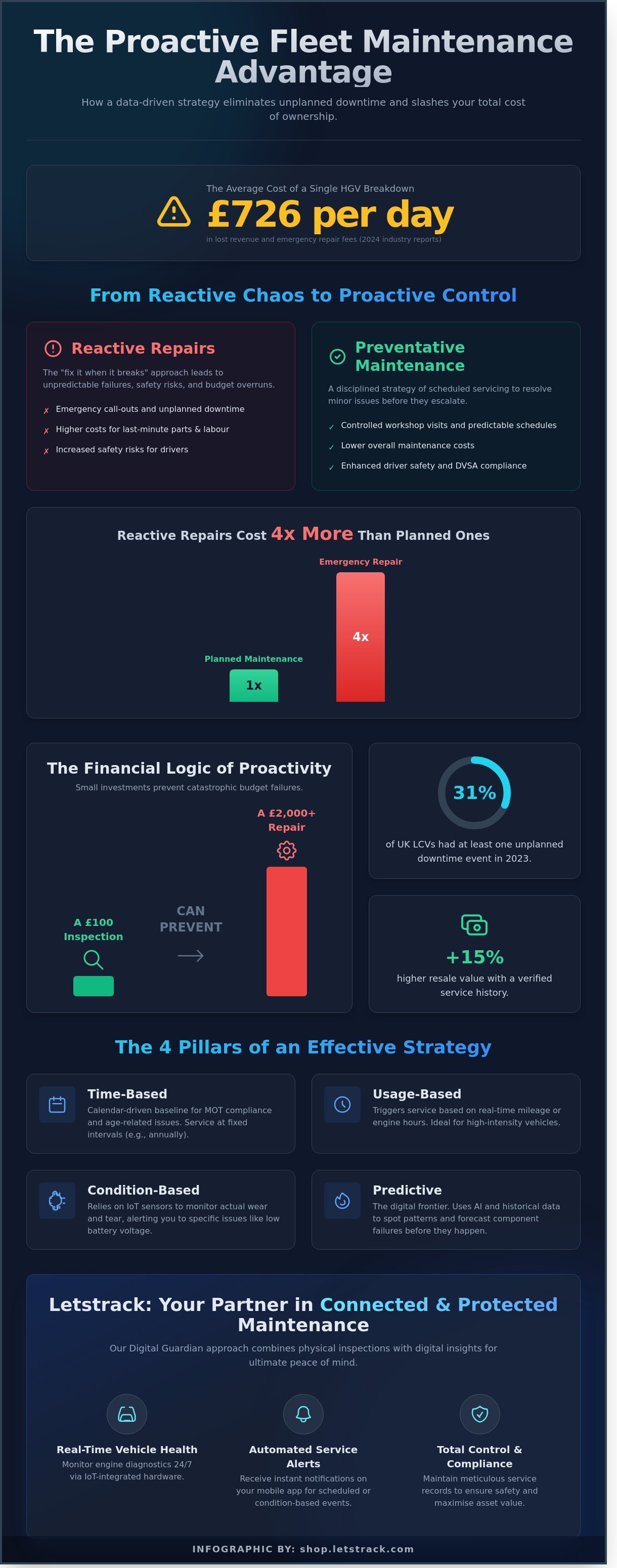
A single HGV breakdown costs British businesses an average of £726 per day in lost revenue and emergency repair fees, according to 2024 industry reports. You already know that keeping your fleet moving is the only way to protect your margins, but manual spreadsheets can't keep up with thirty different service schedules. It's stressful to manage vehicle health while worrying about when the next "check engine" light will appear. We promise to show you how a data-driven strategy for preventative maintenance eliminates unplanned downtime and slashes your total cost of ownership. You'll learn how to transition from reactive repairs to a proactive, automated system that keeps your drivers safe and your budget predictable. This guide explores how IoT-integrated tools and real-time alerts from Letstrack ensure your assets stay connected and protected. We're looking at how encrypted data and intelligent tracking provide the ultimate peace of mind for every UK fleet manager.
Key Takeaways
-
Transition from reactive repairs to a proactive strategy that identifies minor issues before they escalate into costly vehicle breakdowns.
-
Optimise your schedule by combining time-based intervals with real-time usage data for a more precise and efficient service routine.
-
Understand the ROI of preventative maintenance and see how a £100 inspection can safeguard your budget against emergency repairs costing £2,000 or more.
-
Organise your fleet inventory to meet UK MOT standards and manufacturer guidelines, ensuring every vehicle remains compliant and safe.
-
Utilise Letstrack’s "Connected and Protected" technology to automate service notifications and maintain total control over your fleet’s health in real-time.
Table of Contents
Preventive: What is Preventive Maintenance for UK Fleets?
Preventive maintenance is the proactive practice of scheduling inspections, services, and repairs to prevent equipment failure. It's the difference between a controlled service in a workshop and an emergency call-out on the hard shoulder of the M6. For UK fleet managers, this approach shifts the focus from fixing what's broken to maintaining what's working. It's a disciplined regime that keeps your vehicles on the road and your business moving without unexpected interruptions.
The core philosophy is simple. You identify and resolve minor mechanical issues before they escalate into catastrophic breakdowns. Small investments in oil changes, brake pads, and software updates prevent the five-figure engine failures that sink annual budgets. While global technical manuals often use the term Preventive maintenance (PM), the UK transport industry prefers the "preventative" spelling. Both terms describe the same goal: total operational reliability and the elimination of guesswork. A robust strategy typically includes:
-
Scheduled oil and fluid analysis to detect early engine wear.
-
Regular tyre pressure and tread depth checks to maintain fuel efficiency.
-
Brake system inspections every 10,000 miles or according to manufacturer guidelines.
-
Real-time engine diagnostic monitoring via IoT-integrated hardware.
At Letstrack, we view this as a Digital Guardian approach. By using smart hardware and real-time tracking, your fleet is never truly alone. The technology acts as a vigilant eye, monitoring vehicle health 24/7 and sending instant alerts to your mobile app. When you combine physical inspections with digital insights, you create a safety net that ensures your assets stay connected and protected. You gain the confidence that every vehicle leaving the depot is fit for the journey ahead, providing true peace of mind for you and your drivers.
The Vital Importance of Being Proactive
Operating a fleet in the UK presents unique challenges. Roadside breakdowns on busy motorways like the M25 or M1 cause more than just delays; they create significant safety risks. A 2023 industry report found that 31% of UK light commercial vehicles experienced at least one unplanned downtime event during the year. Regular preventative maintenance checks on brakes, tyres, and steering systems ensure your drivers stay safe and compliant with DVSA standards. Meticulous service records protect your assets in the long term. Vehicles with a verified service history often command a 15% higher resale value than those with gaps in their maintenance records.
Preventive Maintenance vs. Corrective Maintenance
Corrective maintenance is reactive. You wait for a component to snap, leak, or smoke before taking action. This is the most expensive way to manage a fleet. Data show that reactive repairs typically cost 4 times as much as planned repairs because they involve emergency procurement of parts and last-minute labour. Preventive maintenance is the disciplined middle ground that delivers peace of mind. It gives you total control over your schedule. You decide when a vehicle is off the road for a few hours, rather than being at the mercy of a mechanical failure during a vital delivery window. It transforms your operations from constant firefighting to a streamlined, predictable success story.
The Four Pillars of an Effective Maintenance Strategy
A robust fleet strategy doesn't rely on a single method. It uses a layered approach to ensure no vehicle is left vulnerable. By combining different data points, you create a safety net that protects your drivers and your bottom line. Most UK fleet managers are now moving away from reactive "fix it when it breaks" habits toward a structured preventive maintenance programme. This shift can reduce repair costs by up to 25% across a standard 12-month cycle. Understanding the four pillars is the first step toward total control.
-
Time-based maintenance: This is your calendar-driven baseline. You service vehicles at fixed intervals, such as every six months or annually. It's essential for staying compliant with UK MOT standards and for catching age-related issues such as perishing rubber seals or fluid degradation in low-mileage vehicles.
-
Usage-based maintenance: This method triggers services based on actual work performed. It uses real-time mileage and engine hours to ensure high-intensity vehicles get the attention they need before parts fail.
-
Condition-based maintenance: This pillar relies on the "health" of the vehicle. Sensors monitor actual wear and tear, alerting you to issues such as thinning brake pads or declining battery voltage before a scheduled service is due.
-
Predictive maintenance: the digital frontier. It uses AI and historical data to spot patterns. If data shows a specific alternator model tends to fail after 60,000 miles in UK winter conditions, you can replace it at 55,000 miles to avoid a roadside emergency.
Usage-Based: The GPS Advantage
Precision is the enemy of waste. Traditional paper logs are often inaccurate; a driver might forget to record a 50-mile journey, throwing your entire service schedule off balance. GPS tracking eliminates the guesswork. By installing the Letstrack S5 GPS tracker, you gain access to real-time mileage data that is sent directly to your management dashboard. You'll know exactly how far every van has travelled. This ensures you aren't servicing vehicles too early and wasting money, or too late and risking safety.
Condition-Based: Listening to the Engine
Modern engines are vocal if you have the right tools to listen. Condition-based monitoring focuses on vital signs like battery health, coolant levels, and oil quality. Using a Vehicle Health Tracker allows you to receive instant alerts the moment an engine fault code appears. In 2023, data suggested that 64% of major engine failures started as minor sensor alerts that were ignored. Real-time connectivity ensures these small glitches don't escalate into a £3,000 engine replacement. It gives you the power to act immediately.
Integrating these pillars creates a "Digital Guardian" for your business. You aren't just fixing machines; you're protecting your team's schedule and your company's reputation for reliability. When you transition to a data-led preventative maintenance model, you replace anxiety with predictable outcomes. It's about staying connected to your assets so they never let you down. You can easily upgrade your fleet security today to start seeing these efficiency gains in your daily operations.
The Financial Logic: Why Proactivity Saves Your Budget
Reactive maintenance is a silent budget killer for UK fleet managers. Waiting for a warning light to flash before taking action creates a chain reaction of avoidable expenses. A breakdown on the M25 isn't just a mechanical failure; it's a financial leak that drains your resources in real-time. When you operate reactively, you're at the mercy of emergency towing fees, which often start at £150 for a standard van. You also face premium out-of-hours labour rates that can instantly double your standard repair costs.
The true cost involves more than just the garage bill. Lost business is the most damaging factor. A single missed delivery slot can result in £250 in immediate penalties and the potential loss of long-term contract value. Shifting to a preventative maintenance strategy turns these volatile variables into predictable, manageable costs. It replaces the chaos of emergency repairs with the calm reliability of a planned schedule.
-
The ROI of Care: A routine £100 check-up, including oil and filter changes, acts as an insurance policy against a £2,200 engine seizure or gearbox failure.
-
Fuel Efficiency: Data from the Energy Saving Trust shows that poorly maintained engines can consume 10% more fuel. Regular tuning reduces your carbon footprint and keeps your fuel card spend under control.
-
Insurance Advantages: Many UK insurance providers offer 5% to 15% discounts on premiums for fleets that provide documented evidence of rigorous maintenance programmes.
Avoiding the "Downtime Trap"
A vehicle off the road is a vehicle losing money. For a typical UK SME, the cost of a single van being sidelined averages between £600 and £800 per day when you factor in driver wages, lost revenue, and temporary hire costs. Scheduled preventative maintenance allows you to organise your fleet so "standby" vehicles are ready to step in without a dip in productivity. You stay in control of the clock, rather than the clock controlling you.
In 2023, a Manchester-based delivery fleet integrated Letstrack’s real-time monitoring tools to overhaul its service schedule. By using instant alerts to catch minor issues before they escalated, they reduced their unplanned downtime by 30%. This shift gave their dispatch team the peace of mind that every vehicle leaving the depot was fit for the journey, ensuring 99% of deliveries remained on schedule.
Extending Asset Lifespan
The mechanical reality is simple: friction is the enemy of your fleet. Regular lubrication, timely belt replacements, and cooling system flushes can effectively double a vehicle’s operational life. This longevity is vital for your long-term Capital Expenditure (CapEx) planning. When your vans last seven years instead of four, you free up significant capital that can be reinvested into business growth or upgrading to newer, IoT-integrated technology.
The digital guardian approach ensures your assets are always monitored and protected. This vigilance means you aren't just fixing parts; you're preserving the heartbeat of your business. It provides a level of security that allows you to focus on scaling your operations rather than managing mechanical crises. Vehicles that undergo frequent, documented servicing experience a 20% slower rate of depreciation compared to those with irregular maintenance histories.
How to Organise a Preventive Maintenance Plan
Building a robust preventative maintenance strategy transforms your fleet from a source of stress into a streamlined asset. It is about moving away from reactive "fix-on-fail" habits and adopting a vigilant, tech-forward approach. By following a structured five-step process, you ensure your vehicles remain "Connected and Protected" while significantly reducing the risk of expensive roadside breakdowns.
-
Step 1: Inventory and Categorise. Start by auditing every vehicle in your fleet. Group them by age, mileage, and duty cycle. A 2023 study by the Association of Fleet Professionals found that mixed fleets without clear categorisation face 12% higher annual repair costs. Distinguish between urban delivery vans and long-haul HGVs to tailor your schedules.
-
Step 2: Establish Service Baselines. Use the 2023 DVSA Guide to Maintaining Roadworthiness as your foundation. Align your service intervals with manufacturer recommendations and UK MOT requirements. For most commercial fleets, a safety inspection every 6 to 12 weeks is the gold standard for maintaining peak performance.
-
Step 3: Integrate Letstrack GPS Tracking. Automation is the key to accuracy. Use Letstrack hardware to monitor mileage and engine hours in real time. This removes the guesswork. You can set instant alerts that trigger when a vehicle is 500 miles away from its next scheduled service, ensuring you never miss a critical check.
-
Step 4: Implement Digital Driver Checks. Drivers are your eyes on the ground. Require a daily "walk-around" check before any vehicle leaves the depot. Use the Letstrack app to report issues like tyre pressure or fluid leaks instantly. Digital reporting creates a transparent "Nil Defect" trail that paper logs cannot match.
-
Step 5: Quarterly Data Reviews. Analyse your repair history every 90 days. If 15% of your fleet shows recurring suspension issues, it is time to adjust your plan. Use these insights to refine your maintenance intervals and predict future component failures.
Leveraging UK Regulations
Compliance is not optional; it is your legal safety net. Under the Road Traffic Act 1988, fleet managers are responsible for ensuring every vehicle is fit for the road. Using digital maintenance logs provides unshakeable evidence for DVSA inspectors or health and safety audits. By maintaining a meticulous digital record, you protect your O-licence and demonstrate a commitment to public safety. This level of transparency offers the ultimate peace of mind for business owners.
The Role of Driver Behaviour
Your drivers directly affect your preventive maintenance costs. Aggressive driving habits, such as harsh braking and rapid acceleration, can increase brake pad and tyre wear by up to 33%. Letstrack allows you to monitor these events in real time, giving you the data you need to coach your team. You can identify and incentivise your "favourite" drivers who maintain their vehicles to the highest standard. This proactive approach reduces mechanical strain and keeps your fleet running efficiently for longer.
Secure your fleet and gain total visibility over your maintenance schedules today.
Explore Letstrack Fleet Solutions
Letstrack: Your Partner in "Connected and Protected" Maintenance
Letstrack provides a sophisticated ecosystem where high-performance hardware meets intelligent software. For UK fleet managers, this isn't just about knowing where a vehicle is; it's about knowing how it's performing. By integrating IoT-integrated sensors with a user-friendly app, we've created a "Digital Guardian" that oversees every mile. This transition from basic tracking to comprehensive asset management allows businesses to implement preventative maintenance strategies that reduce unplanned downtime by up to 25%.
You'll never miss a critical service interval again. The Letstrack platform sends automated push notifications directly to your smartphone or desktop the moment a vehicle hits a specific mileage or engine-hour threshold. These real-time updates eliminate the need for manual logbooks, which are prone to human error. When a van requires an MOT or a lorry needs a brake inspection, the system alerts you instantly. It's a proactive approach that ensures your fleet remains compliant with UK road safety standards while protecting your bottom line.
Communication is the backbone of any efficient fleet. Letstrack Circles transform how you manage your team by organising drivers, mechanics, and managers into a single, secure communication hub. Instead of juggling fragmented WhatsApp messages or emails, you can share location data and maintenance status within a dedicated circle. This level of connectivity ensures that if a vehicle flags a fault code, the right person is informed immediately. It builds a culture of transparency where everyone is invested in the "Connected and Protected" philosophy.
Data security is a non-negotiable priority for modern businesses. We understand that your fleet's movement and health data are sensitive. Every byte of information transmitted between our trackers and your device is encrypted and private. We use bank-grade security protocols to ensure that your operational intelligence remains yours alone. You have full control over who sees your data, giving you the confidence to scale your operations without compromising privacy.
Hardware Built for Vigilance
Total control starts with the right equipment. For heavy-duty asset protection, the Shield 4G GPS Tracker offers a robust solution that withstands the rigours of construction sites and long-haul logistics. If you need immediate results across a diverse fleet, the Easy Plug Tracker can be deployed in under 60 seconds via the OBD port. These devices act as your eyes on the road, providing the precision required for effective preventative maintenance and theft recovery.
Join the Community of Peace of Mind
We're shifting the focus from simply tracking location to actively safeguarding health and safety. This evolution ensures that your drivers are safe and your vehicles stay on the road longer. It's time to move beyond reactive repairs and embrace a future where technology does the heavy lifting. Protect your assets, protect your family, and protect your business's future with a system built for the modern world. You can watch our YouTube channel to see our trackers in action and discover how we're redefining fleet security across the UK. Don't leave your fleet's health to chance; join the community that values total awareness.
Take Control of Your Fleet’s Efficiency Today
Managing a UK fleet in 2026 requires more than just reacting to breakdowns. You've seen how a structured preventative maintenance strategy slashes unplanned downtime and protects your bottom line from unexpected £2,000 repair bills. By focusing on real-time data and the four pillars of fleet health, you transform your vehicles from liabilities into reliable assets. Letstrack provides the vigilant oversight your business needs to stay ahead of wear and tear through IoT-integrated hardware.
We bring technical precision to your fingertips. With over 1 million happy users worldwide and a Red Dot Design Award under our belt, our platform ensures your drivers are safe and your vehicles are efficient. You'll benefit from UK-based support and expertise that understands local regulations and road conditions. It's time to stop worrying about what might go wrong and start seeing everything go right. Join a community that values connectivity and security above all else.
Join the Letstrack community and get total peace of mind for your fleet today.
Your journey toward a more protected and efficient fleet starts with a single click. We're ready to help you stay connected and protected every mile.
Frequently Asked Questions
What is the most common type of preventative maintenance?
Oil and filter changes are the most frequent preventive maintenance tasks for UK fleet managers. Most light commercial vehicles require this service every 10,000 miles to prevent engine friction and extend asset life. You should also prioritise tyre pressure checks and tread depth measurements to ensure every vehicle stays above the 1.6mm legal limit for safety and compliance.
How often should I perform preventative maintenance on my fleet?
You should schedule maintenance based on manufacturer guidelines or every six months for standard fleet operations. Heavy Goods Vehicles (HGVs) in the UK often require safety inspections every 4 to 13 weeks, depending on their age and mileage. Use Letstrack real-time alerts to trigger service notifications automatically when your vehicles hit specific mileage milestones.
Can preventative maintenance really reduce my fuel costs?
Regular maintenance can reduce fuel consumption by up to 15%, according to Department for Transport data. Properly inflated tyres and clean air filters allow the engine to run more efficiently, reducing diesel consumption. Keeping your fleet in peak condition ensures you aren't wasting money on avoidable fuel expenses every time a driver hits the road.
Is preventative maintenance mandatory for UK businesses?
Yes, the Health and Safety at Work Act 1974 requires all business vehicles to be roadworthy and safe for employees. The DVSA requires O-Licence holders to follow a strict maintenance schedule to remain compliant with national regulations. Failure to maintain your fleet can lead to heavy fines or the immediate revocation of your operator's licence.
What is the difference between preventative and predictive maintenance?
Preventive maintenance follows a fixed schedule based on time or mileage to prevent failures before they occur. Predictive maintenance uses IoT-integrated sensors and real-time data to identify the exact moment a specific part is likely to fail. While preventative care keeps you on a steady path, predictive technology offers the ultimate peace of mind by spotting issues before they occur.
How does GPS tracking help with vehicle maintenance?
GPS tracking provides instant alerts for engine fault codes and automates your mileage logs. The Letstrack app acts as a Digital Guardian, monitoring every vehicle 24/7 to ensure no service deadline is ever missed. This connectivity transforms manual paperwork into a streamlined digital ecosystem, keeping your fleet protected and your drivers safe through constant awareness.
What happens if I ignore preventative maintenance schedules?
Ignoring maintenance schedules leads to a 30% increase in emergency repair costs and significant vehicle downtime. You risk catastrophic mechanical failures or accidents caused by worn components like brake pads or tyres. Beyond the financial impact, you lose the confidence and security that comes from knowing your assets are "Connected and Protected" on the road.
How do I start a maintenance programme for a small fleet?
Start by auditing your current assets and recording the last service date for every vehicle in your fleet. Implement a digital tracking system, such as Letstrack, to monitor usage in real time and set automated reminders for MOTs and oil changes. Focus on the basics first, such as monthly safety walk-arounds, to build a reliable culture of vigilance and efficiency.