
This is the long version. Every part of LetsTrack, the philosophy behind it, the hardware inside it, the network built around it, and the honest limits of all of it, gathered into one place rather than scattered across a dozen separate posts.
The Ecosystem: One App for Everything
Create a seamlessly connected world where nothing of value is ever lost. That single mission drives everything from a tiny key tag to a full enterprise fleet command centre. LetsTrack manages everything from 1 to 10,000 plus assets flawlessly, backed by 99.9 percent cloud reliability, active in key international markets.10,000+ assets managed on one platform
The app organises everything into one Ecosystem Wheel: People and Pets (tags, collars, SOS devices), Vehicles (OBD, wired, dashcams), Things (asset, inventory and key tags), and Places and Journeys (geofencing, route replay, analytics). A geofence turns a plain map into a warning system, firing the moment someone enters or leaves a home, school, or warehouse. A journey adds time on top, with sub-second refresh rates and full trip history.
Real result
A regional rental company suffered a coordinated multi-vehicle theft. The app triggered remote engine immobilisation, and live location sharing with local law enforcement led to 100% fleet recovery within two hours.
Choosing a Device, and What Happens After
Every device solves a different version of the same problem: can it be plugged in, wired in, or does it need to survive completely on its own?
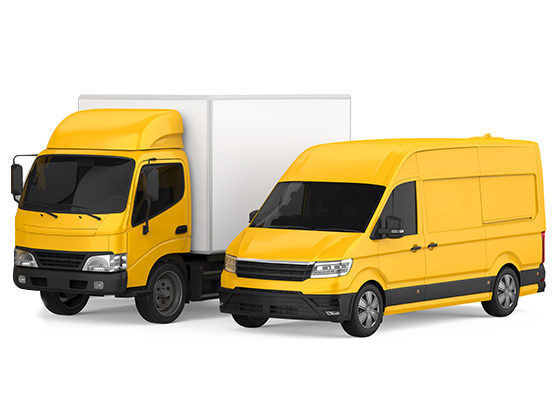
For cars, vans, and fleets
OBD Tracker: Zero-cut installation, pulling diagnostic data straight from the car's computer. Ideal for private cars and rental fleets.
Wired Tracker
Hidden installation with remote engine cut andanti-tamperr alerts, built for commercial fleets and high theft risk.
Video Telematics
Road and cabin streaming with harsh driving alerts and accident evidence.
For things that never see a plug socket
A fully waterproof, magnetically mounted tracker with a standalone battery life spanning months to years, built for shipping containers, unpowered trailers, and heavy construction equipment.
| Product | Ease of Install | Battery | Feature Depth | Target User |
|---|---|---|---|---|
| OBD Tracker | Powered | Consumer / Fleet | ||
| Wired Tracker | Powered | Commercial Fleet | ||
| Magnetic Tracker | Enterprise Assets | |||
| Pet Tracker | Consumer | |||
| Bluetooth Tag | Consumer |
Most people start with the one thing that has actually caused a moment of panic before: a car, a dog, a set of keys, and add to the setup later.
What happens after checkout
Hardware selection, professional installation by a pan-national network, global connectivity bundled in, and 24/7 support form a continuous loop, not a funnel that ends at your doorstep. Underneath it all, a technology stack carries every signal from multi-constellation GPS through the device, cellular networks, an AWS- and Azure-backed cloud, to a real-time alert on your phone, all in milliseconds.
Back to top ↑Community Alert: When Hardware Isn't Enough
A smart tag without a human network is just an expensive nametag. Most trackers answer one question: where is it right now. That fails the moment a tag leaves Bluetooth range, the battery dies, or the signal drops. A GPS chip cannot search, knock on a door, or ask a stranger to look up. Only a human network can.
When an owner marks something as lost, Community Alert converts nearby users, partner venues, and social platforms into a search party using zero-typing activation, a visible cash reward, and live radar tracking. It matches a panicked owner, high motivation but low capacity to search alone, with an uninvolved bystander, low motivation but high capacity simply by being nearby. A reward gets attention. A frictionless report, no app install required, turns attention into action within seconds.
| Dimension | Passive Trackers | LetsTrack Community Alert |
|---|---|---|
| Range limitation | Fails outside Bluetooth range | Limitless crowdsourced reach |
| Actionability | "Seen here 10 minutes ago" | "2,482 people are looking right now" |
This instinct is not new. Neighbourhood Watch prevents 26 crimes out of every 100 through mobilised communities. DogLost proved the same appetite over 15 years using little more than email and paper posters.
Sectors, Value, and Where It's Headed
The same platform runs very different lives. Families and elder care, pet owners, and individual asset protection on one side. Logistics and transportation, construction and heavy industry, and government, schools, and rentals on the other.
For Families
Total peace of mind, immediate recovery capability, potential insurance reductions.
For Fleet Owners
Reduced fuel and maintenance costs, faster deliveries, less supply chain theft.
For Dealers: High-margin hardware sales and sticky, recurring SaaS revenue.
What makes it hard to copy: a true unified ecosystem engineered as hardware and software together, UX leadership that brings consumer-grade design to enterprise telematics, infinite scalability from one set of keys to 10,000 trucks on the same platform, and continuous innovation through OTA updates. The roadmap ahead adds AI-driven predictive maintenance, smart city traffic integration, and next-generation IoT with 5G tracking and satellite fallbacks for total dead zones.
Back to top ↑How Growth Works, Honestly
A recovered pet does not just make one family happy. An owner posts about it, friends see it, and some of those friends were never LetsTrack users. That loop runs in five steps: successful recovery, unscripted social virality, free brand impressions, subscription upsell, and compounding data that sharpens future geofencing.
A loop this effective needs limits, so guardrails are built in rather than left to good intentions: clear reward handling protocols, alert fatigue caps so nearby users are never spammed, trust and moderation using reputation signals to catch false reports, and data instrumentation to eventually publish verifiable recovery statistics rather than just claim them.
One Map, Different Things Underneath
On the dashboard, a car, a dog, and a person you love show up as identical pins, same size, same shape. That looks careless until you see what happens beneath the surface. A map is a spatial tool, and trying to make it also express relationships or duty of care would make it worse at its one job. The nuance lives one layer underneath, in what happens the moment you actually tap the pin.
Mark a bag as lost and mark a person as needing help, and four very different things run underneath the same tap: track live, choose reach, add incentive (used for lost items, never for a person's SOS), and confirm facts. The real difference was never going to be a bigger icon anyway. It is consent. A car cannot agree to be tracked. A person, inside a Circle, actively joins and can just as deliberately leave.
Back to top ↑The Honest Questions
Isn't tracking my family a bit uncomfortable?
Circles only ever show locations between people who have actively joined the same group. Nobody gets added silently.
Will checking the app constantly make me more anxious?
It can, if a dashboard is built to be stared at. That is why the app leans on real-time alerts and geofencing rather than encouraging constant checking.
What happens to my location data?
Bank-grade encryption in transit and at rest, strict GDPR compliance, tamper-proof hardware, and automatic over-the-air updates.
What if the battery dies or the signal drops?
That is the shared blind spot of every tracker on the market, and exactly the gap Community Alert exists to close.
Do I have to buy every device at once?
No. The app is free and stays useful with one device in it. Most people start with whichever thing has caused a real moment of panic before.
A Day With LetsTrack
6:52am, keys go into a coat pocket with a smart tag clipped to the ring. 7:40am, a teenager drives to school alone for the first time, and a parent gets exactly one notification: entered school zone. 11:15am, a fleet manager watches eighteen vans move across a single map, the same discipline that once cut fuel usage by 18 percent and lifted on-time deliveries by 22 percent.
3:20pm, a dog finds a gap in the fence. Community Alert activates in a single tap, a reward gets set, and twenty-two minutes later a jogger two streets over reports a sighting. By 3:52pm, the dog is home. By 11:47pm, everything is quiet again: car parked, keys on the counter, dog home, eighteen vans logged off for the night.
Most days, nothing happens. That is the whole point. On the one day something does, the system is already quietly ready for it.
Back to top ↑The First Ten Minutes
A pet bolts. A phone vanishes. A car isn't where you left it. What you do next matters more than anything you do afterwards.
Stop moving for thirty seconds
Think about the last confirmed location and direction before running anywhere.
Check the app first
A live pin beats a guess. Note the last known point and time even if the signal has since gone quiet.
Search in a radius, not a direction
Outward from the last known point, not down the one street that feels most likely.
Widen the search by minute five
Mark it as lost and activate Community Alert. A reward, radius, and shareable card generate themselves in seconds.
Share the alert, not just the panic
A specific card with a photo and location gets a real response. A vague message rarely does.
The best version of this story is the boring one: the dog was two gardens over, the phone had slipped under the seat. This plan exists to make most days end in five quiet minutes rather than an hour of panic that never needed to happen.