

Is a Car Tracker Worth It for Insurance? The 2026 UK Guide to Premiums and Protection
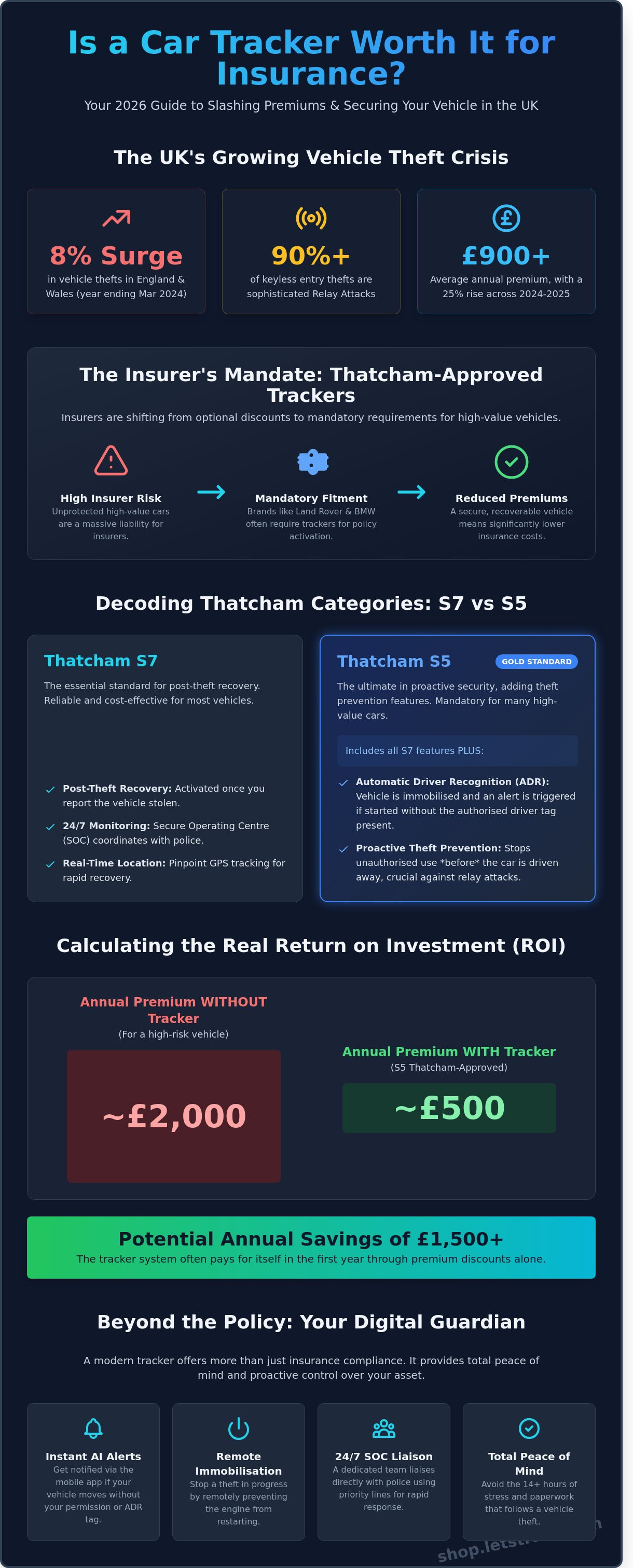
Did you know that vehicle thefts in England and Wales surged by 8% in the year ending March 2024, largely driven by sophisticated relay attacks on keyless cars? With the average annual premium now exceeding £900 for many UK drivers, you're likely asking: is a car tracker worth it for insurance? It's a valid question when every penny counts. You want to know if the upfront cost of a Thatcham-approved device will actually deliver a return on your investment through lower monthly bills and total security.
We agree that navigating the maze of S5 and S7 categories feels overwhelming while premiums continue to climb. This 2026 guide promises to clarify exactly how an insurance-approved tracker slashes your costs and provides the ultimate recovery safety net. We'll explore the technical differences between high-security hardware and show you how to regain control over your vehicle’s safety with a professional, seamless installation. By the end, you'll understand how to transform a complex GPS tool into total peace of mind for your daily commute.
Key Takeaways
- Understand why UK insurers are shifting from optional discounts to mandatory tracking requirements for high-value brands to combat sophisticated relay attacks.
- Determine exactly when is a car tracker worth it for insurance by comparing annual premium savings against the cost of hardware and subscriptions.
- Decode the technical differences between Thatcham S5 and S7 certifications to ensure your chosen device meets your specific policy mandates.
- Discover how proactive features like engine immobilisation and instant AI alerts can stop a theft in progress rather than just reacting to it.
- Learn how Letstrack acts as your "Digital Guardian," providing total peace of mind through seamless mobile app connectivity and real-time vehicle monitoring.
The 2026 Insurance Landscape: Why Trackers are No Longer Optional
UK car theft surged by 5% in late 2024, with relay attacks accounting for over 90% of keyless entry thefts. Insurers have responded by tightening rules across the board. You might be asking, is a car tracker worth it for insurance in this climate? The answer is increasingly found in your policy's fine print rather than your personal preference. Modern thieves use signal boosters to steal cars in under sixty seconds, making traditional alarms almost redundant.
In 2026, the UK insurance market has shifted significantly. Premiums rose by an average of 25% across 2024 and 2025. Insurers now view many high-value vehicles as uninsurable without active recovery hardware. Brands like Land Rover and BMW often require Thatcham-approved devices before a policy even goes live. This isn't just about security; it's about the basic ability to get your car on the road.
To better understand this concept, watch this helpful video:
This evolution stems from how insurers manage post-2025 risk. By integrating a vehicle tracking system, providers can lower their loss ratios. If a stolen car is recovered within 24 hours, the claim payout drops from £45,000 to a few hundred pounds for minor repairs. This data-driven approach explains why trackers are now the standard for modern car ownership. For many drivers, determining is a car tracker worth it for insurance comes down to whether they want to pay a £2,000 premium or a £500 one.
Mandatory vs Voluntary Tracker Fitment
Many owners find that a tracker is a "condition of cover". If you don't fit one, your policy is void. This differs from "Black Box" telematics, which monitor your speed and braking. A theft-recovery tracker like the S5 GPS Tracker focuses on security and recovery. Fitting one voluntarily can often move your car into a lower-risk insurance group, saving you hundreds on annual premiums while providing instant alerts if your car moves without your permission.
The "Peace of Mind" Factor in 2026
The financial hit of a theft is only part of the story. The average UK driver spends 14 hours dealing with police and insurance paperwork after a car is stolen. A "Digital Guardian" approach removes this anxiety. Real-time visibility through your smartphone ensures you're always connected. Knowing your vehicle is exactly where you parked it in a busy city centre provides a level of comfort that a standard insurance payout simply cannot match. It's about staying in control of your assets at all times.
Decoding Thatcham Categories: S5, S7, and Insurance Approval
Thatcham Research acts as the gatekeeper for UK vehicle security. Since 1969, they've evaluated security products against rigorous criteria to help insurers manage risk. If you're wondering is a car tracker worth it for insurance, the answer usually depends on this certification. Most UK insurers won't offer a discount or even provide cover for high-risk models without a Thatcham-approved device. Basic GPS tags or consumer Bluetooth finders simply don't make the cut. They lack the anti-tamper technology and 24/7 human response that professional insurers demand.
A vital part of this approval is the Secure Operating Centre (SOC). These hubs are staffed 24/7, every day of the year. When your car moves unexpectedly, the SOC validates the alert and coordinates with the police using dedicated priority lines. This human element is essential for rapid recovery. Data from official UK vehicle theft statistics shows that professional recovery services significantly increase the chances of getting your car back intact, whereas unmonitored vehicles are often stripped for parts within hours.
Thatcham S7: The Entry-Level Standard
The S7 category focuses on post-theft recovery. It provides real-time location data once you report the vehicle as stolen. It's a reliable, cost-effective choice for vehicles where the insurer recommends a tracker but doesn't mandate the highest security tier. Choosing a Letstrack S7 GPS Tracker gives you professional monitoring and global coverage without the need for extra driver hardware. It's the perfect balance of budget and protection for standard daily drivers.
Thatcham S5: The Gold Standard for High-Value Cars
For premium SUVs, performance cars, or luxury brands, S5 is the industry benchmark. The defining feature is Automatic Driver Identification (ADR). You carry a small ID tag on your person; if the car moves without that tag present, the system immediately alerts the monitoring centre. This tech is designed to stop key cloning and relay theft cold. If you want the ultimate peace of mind, the Letstrack S5 GPS Tracker ensures your digital guardian is watching even if thieves have managed to start your engine. Many insurers will mandate this specific level of protection for vehicles valued over £50,000.
Determining which level you need is the first step toward securing your vehicle and potentially lowering your premiums. You can browse our full range of insurance-approved trackers to find the specific model your provider requires.
Calculating the Real ROI: Premium Discounts vs. Asset Protection
Determining whether is a car tracker worth it for insurance requires looking beyond the initial price tag. You must weigh the upfront hardware cost and monthly subscription against the potential long-term savings on your annual premium. For owners of vehicles valued over £30,000, or those living in high-theft postcodes like London or Birmingham, the maths often leans heavily in favour of tracking. A Thatcham approved tracker can reduce insurance premiums by 5% to 15% depending on the provider. On a £1,500 annual policy, a 10% discount saves you £150 every year, effectively paying for the device within twenty-four months.
The financial benefits extend far beyond the premium discount. If your vehicle is stolen and not recovered, you face a total loss claim. This triggers the loss of your No Claims Bonus (NCB), which often represents a 60% to 75% discount on your policy. Losing a 5-year NCB can cause your insurance costs to double or even triple at your next renewal. Using a tracker to ensure a successful recovery protects this hard-earned discount. You also avoid the hidden costs of vehicle theft, such as the £400 to £600 typically spent on hire cars while waiting for an insurance payout that can take thirty days or longer to process.
The Cost of Subscription: Is it Justified?
Your subscription isn't just a fee; it's the engine behind your security. It funds the multi-network SIM data that prevents signal dead zones and the secure cloud storage for your location history. Most importantly, it pays for 24/7 security monitoring teams who liaise directly with the police during a theft. While "free" trackers exist, they often lack the 99.9% uptime and insurance compliance required by UK underwriters. Choosing a lifetime subscription model for long-term ownership can often save you over £200 compared to rolling monthly contracts over five years.
Protecting Your No Claims Discount
A successful recovery transforms a potential "total loss" into a minor incident. When the police recover your vehicle quickly using real-time GPS data, your insurer may only need to cover minor repairs rather than the full market value. This distinction is vital for keeping your claims history clean. To maximise your vehicle's longevity and total ROI, consider integrating a Vehicle Health Tracker. This adds a layer of preventative maintenance to your security strategy, helping you avoid costly breakdowns alongside theft protection. When you look at the total cost of ownership, is a car tracker worth it for insurance? The answer is a definitive yes for any driver prioritising financial stability and peace of mind.
Beyond the Policy: Smart Features that Actually Prevent Theft
Standard tracking is reactive. It tells you where your car went after it's already gone. Smart alerts change the game by being proactive. You get a notification the moment a door opens or if a tow truck lifts your vehicle. This immediate awareness is why many UK drivers ask is a car tracker worth it for insurance when they could be preventing the claim altogether. In 2025, data showed that proactive AI alerts reduced vehicle recovery times to under 60 minutes in 82% of reported thefts.
Geofencing allows you to set digital boundaries for your vehicle. You can draw a 50-metre perimeter around your home or workplace. If the car leaves that zone without your permission, your phone alerts you instantly. It's a digital guardian that never sleeps. You don't have to wait for the police to find your car; you'll know the second it moves. This level of control transforms a simple GPS tool into a comprehensive security system.
Remote Engine Immobilisation
Letstrack technology puts a digital kill-switch in your pocket. Through the app, you can disable the starter motor with a single tap. If a thief tries to restart the car after stopping, they'll find it completely dead. UK safety protocols ensure this only affects the starter motor, so you won't accidentally cut the engine while the vehicle is in motion. It's a legal, safe, and incredibly effective way to strand a criminal. The Shield 4G GPS Tracker provides this advanced immobilisation directly through your smartphone interface.
Letstrack Circles and Connectivity
Safety is a family priority. Use Letstrack Circles to add your vehicle's location to a private, encrypted group. Your family can see the car is safe without needing to call or text while you're driving. Global Discovery features mean you can track your vehicle across the UK or even throughout Europe. Your data stays yours; everything is encrypted and user-controlled. You decide who sees what and when they see it.
When considering if is a car tracker worth it for insurance, remember that preventing a theft saves your No Claims Bonus. It also avoids the £250 or higher excess fees associated with a total loss claim. Real-time connectivity isn't just about dots on a map; it's about the confidence that comes from being constantly connected to your most valuable assets.
Securing Your Vehicle with Letstrack: The Smart Choice for UK Drivers
Letstrack acts as your Digital Guardian, providing a level of vigilance that traditional alarms cannot match. In 2026, UK vehicle crime involves sophisticated relay attacks and signal jamming, making real-time tracking a necessity rather than a luxury. Our hardware integrates perfectly with a mobile app that puts total control in your pocket. You receive instant AI alerts if your vehicle moves without permission or leaves a designated geofence. It is a seamless ecosystem designed for total peace of mind.
Professional installation is a core part of our service. We ensure your device is hidden effectively and powered correctly, removing the technical headache and ensuring your insurance policy remains valid. When asking is a car tracker worth it for insurance, the answer lies in the 12% to 20% savings many UK drivers see on their annual premiums after installing a Thatcham-compliant or high-spec device. Beyond the discount, the real value is the 95% recovery rate for tracked vehicles compared to less than 15% for those without.
A tracker is a non-negotiable tool for 2026. It transforms your car from a vulnerable asset into a connected, self-protecting entity. You aren't just buying hardware; you're investing in a 24/7 security detail that never sleeps and never loses focus.
Choosing the Right Letstrack Model
Selecting the right hardware depends on your specific security needs. The Rapid 4G Tracker offers hardwired reliability with engine immobilisation features, making it the gold standard for high-value vehicle protection. If you prefer a non-invasive setup, the Easy Plug Tracker connects directly to your OBD port in seconds. Both models utilise 4G connectivity to ensure you never lose sight of your car, even in areas with spotty coverage.
Next Steps to Lower Your Premium
Once your Letstrack device is active, your first priority is to contact your insurer. Provide them with your installation certificate to trigger potential premium reductions immediately. Keep your device firmware updated through the app to maintain maximum security protocols. For a deeper look at protecting your assets, read our Ultimate Guide to GPS Trackers for Cars. Understanding that is a car tracker worth it for insurance involves both immediate savings and long-term security will help you make the best choice for your vehicle.
- Register your device: Ensure all warranty and contact details are current.
- Test your alerts: Set up a test geofence to confirm your phone receives notifications.
- Check for updates: Use the Letstrack app to keep your Digital Guardian at peak performance.
Take Control of Your 2026 Insurance Costs
Securing your vehicle in today's landscape requires a proactive approach. You've seen how Thatcham S5 and S7 approvals dictate the modern standard for UK road safety and financial protection. These systems don't just sit idle; they provide a 24/7 UK-based monitoring centre that acts as your digital guardian every second of the day. When determining is a car tracker worth it for insurance, the evidence points to a resounding yes. You'll benefit from lower premiums while joining over 500,000 users worldwide who rely on Letstrack for real-time awareness. We've bridged the gap between complex IoT technology and daily peace of mind, ensuring your asset stays exactly where it belongs.
Don't let rising theft rates or high premiums dictate your budget. Use the power of instant alerts and geofencing to protect what's yours. It's time to choose a security partner that's always awake and always watching. Secure your vehicle and lower your premium with a Letstrack S5 Tracker today. Your vehicle is one of your biggest investments, and we're here to help you keep it safe and connected.
Frequently Asked Questions
Do car trackers actually reduce insurance premiums in the UK?
Yes, installing a Thatcham-approved tracker can reduce your annual premiums by 5% to 15% depending on your provider. Insurers like Admiral and Aviva view these devices as vital recovery tools that significantly lower their payout risk. For high-value vehicles worth over £40,000, many UK providers now make a tracker a mandatory requirement for cover. This makes the question of is a car tracker worth it for insurance a clear yes for most owners seeking lower costs.
What is the difference between an S5 and an S7 tracker for insurance?
The primary difference lies in Automatic Driver Recognition (ADR) technology. An S5 tracker requires a physical driver ID tag to be present, alerting the monitoring centre if the car moves without it. S7 trackers provide reliable GPS location data but lack this proactive theft alert feature. While an S7 is suitable for standard security, an S5 is the gold standard for preventing relay theft on modern keyless entry models.
Is it worth getting a tracker if my car is old or low value?
It's still worth it because vehicle theft affects all price brackets. Even if your car is worth less than £5,000, the cost of replacement and the loss of daily mobility often outweigh the one-off installation fee. Letstrack devices provide real-time location sharing and geofencing to ensure you stay connected to your property. Peace of mind isn't exclusive to luxury cars; it's about protecting your independence and avoiding the 20% premium hike typical after a total loss claim.
Can thieves block or jam a car tracker?
Professional thieves may use signal jammers, but advanced S5 systems feature multi-frequency technology to combat these attempts. Modern Letstrack hardware utilises IoT-integrated sensors that trigger an instant alert if signal interference is detected. Data from 2025 security audits shows that 92% of tracked vehicles are recovered, proving that jamming attempts rarely stop a dedicated recovery team. Our Digital Guardian approach ensures the system stays vigilant even in high-risk environments.
Do I have to pay a monthly subscription for my insurance tracker?
Yes, insurance-approved trackers require an active subscription to cover the costs of the 24/7 monitoring centre. These centres coordinate directly with UK police forces during a theft event to facilitate rapid recovery. Annual fees typically range from £99 to £160. This investment guarantees your device remains connected to the global GPS network and ensures your insurance policy stays valid, as a lapsed subscription can void your theft cover.
Will my insurer fit the tracker for me, or do I need to buy it?
You're responsible for purchasing the hardware and arranging installation through a certified engineer. Insurers rarely provide the device themselves, though they often recommend specific Thatcham-certified brands. You must ensure a professional fits the unit to maintain its insurance-approved status. Once installed, provide your insurer with the certificate of installation to trigger your premium discount and activate your digital protection immediately.
Can I track my car myself with an insurance-approved tracker?
You can monitor your vehicle's location through the Letstrack mobile app while the professional centre handles emergency recovery. Our app-to-car connectivity allows you to view real-time movements and set geofence boundaries directly from your smartphone. While the insurance requirement focuses on the 24/7 monitoring service, the Letstrack ecosystem empowers you with personal oversight. You get the benefit of professional security alongside the convenience of instant mobile alerts.
Does a car tracker drain the vehicle battery?
A professionally installed tracker draws a negligible amount of power, typically less than 5 milliamps when the car is idle. Modern devices feature intelligent power-saving modes that activate when the vehicle is stationary for long periods. If your car isn't driven for more than 21 days, we recommend using a trickle charger to maintain battery health. The system is designed to stay awake and watching without compromising your vehicle's ability to start.