


How to Install a Car GPS Tracker UK: The Complete 2026 Security Guide
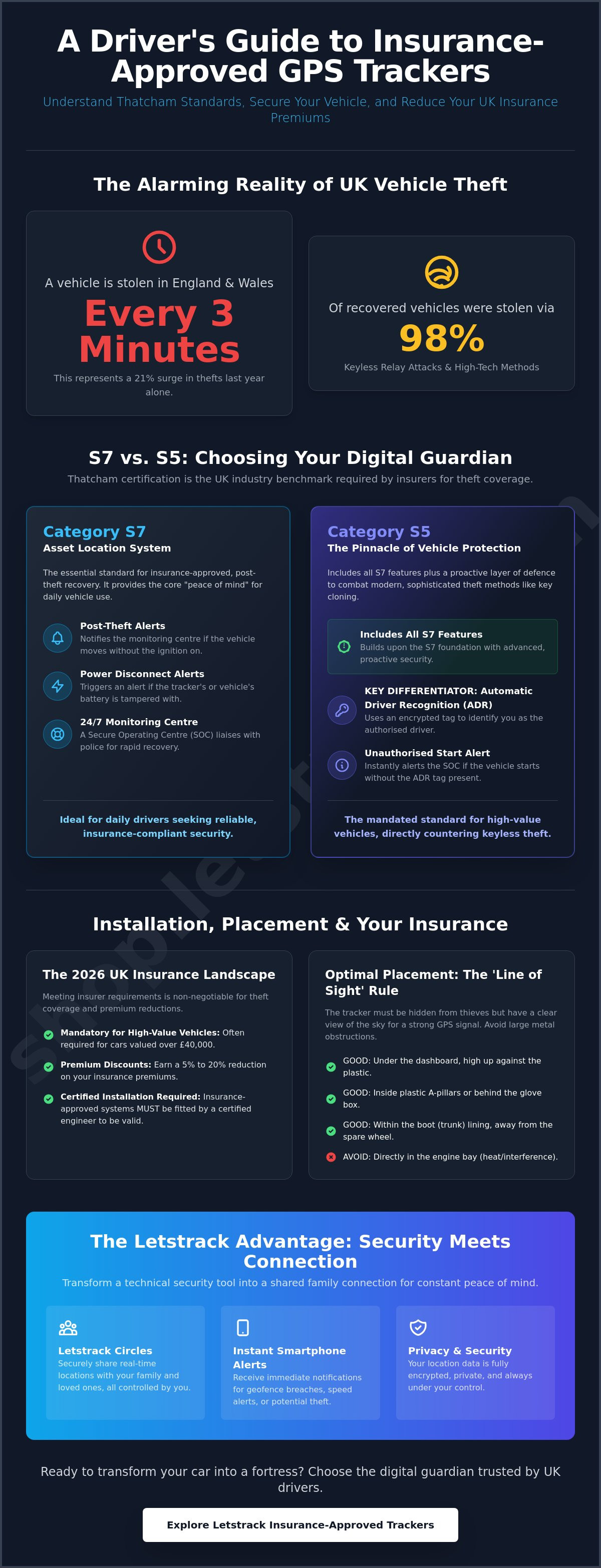
In England and Wales, vehicle thefts surged by 21% last year, meaning a car is now stolen every three minutes. It's a sobering reality that leaves many owners feeling vulnerable, especially when 98% of recovered stolen vehicles were taken via high-tech relay attacks. You likely want the best protection possible but feel overwhelmed by the technical jargon of Thatcham standards and the fear of damaging your car's delicate electronics. Understanding how to install a car gps tracker uk correctly is the difference between a rejected insurance claim and total digital guardianship.
This guide simplifies the process, ensuring your installation meets the strict 2026 security benchmarks required for insurance premium reductions. You'll master the critical differences between S7 entry-level monitoring and S5 systems featuring Automatic Driver Recognition. We'll show you how professional integration creates a seamless link between your smartphone and your vehicle, providing the instantaneous awareness you need to stay in control. From choosing the perfect hidden location to navigating the Crime and Policing Act 2026, you're about to transform your car into a fortress.
Key Takeaways
- Identify the critical differences between S7 and S5 Thatcham standards to satisfy UK insurance requirements and secure your premium discounts.
- Learn how to install a car gps tracker uk by selecting the right connection method, whether you require a hardwired system or a portable battery-powered unit.
- Locate the most effective hiding spots using the "Line of Sight" rule to ensure your device remains invisible to thieves yet fully connected to the sky.
- Prepare your toolkit with essential items like a multimeter and wire strippers to safely tap into a permanent 12V power source without damaging vehicle electronics.
- Sync your hardware with Letstrack Circles to transform a technical security tool into a shared family connection that offers constant peace of mind.
Understanding Car GPS Trackers and UK Thatcham Standards
Securing your vehicle in 2026 requires more than a simple alarm. Thatcham Research acts as the UK's primary authority on vehicle security, establishing the rigorous testing protocols that every insurance-approved device must pass. When you look into Understanding Car GPS Trackers, you'll find that Thatcham certification is the industry benchmark. It ensures your hardware can withstand tampering, detect signal jamming, and maintain a constant link to a Secure Operating Centre (SOC). This professional monitoring is what separates a high-end security system from a basic retail finder.
The distinction between a standard GPS finder and an S7 or S5 system is critical for your protection. While a basic tracker might show you where your car is parked, an insurance-approved system proactively alerts a 24/7 SOC the moment a theft is detected. These centres liaise directly with UK police forces, providing real-time data to facilitate a rapid recovery. If you are researching how to install a car gps tracker uk, you must first decide if you need a reactive system or a proactive digital guardian.
To better understand how these devices integrate with your vehicle, watch this helpful video on a direct-to-battery installation:
S7 vs. S5: Which Installation Path is Right?
The Category S7 Asset Location System is the standard entry point for insurance-approved tracking. It focuses on recovery after a theft occurs, alerting the SOC if the vehicle moves without the ignition or if the battery is disconnected. For many, this provides the essential "peace of mind" needed for daily commutes. You can explore the S7 GPS Tracker for a reliable, insurance-compliant solution that balances cost and security.
Category S5 represents the pinnacle of vehicle protection. It includes Automatic Driver Recognition (ADR), which uses a small encrypted tag to identify the authorised driver. If the car starts without the tag present, the SOC receives an immediate alert. This technology is specifically designed to combat keyless relay attacks and key cloning, which account for 98% of modern vehicle thefts. S5 systems are now the standard requirement for high-value vehicles, providing a layered defence that stops thieves before they even leave your driveway.
The 2026 Insurance Landscape in the UK
In the current UK market, insurers frequently mandate a Thatcham-certified tracker for vehicles valued over £40,000. This requirement isn't just a suggestion; it's a condition of your theft coverage. While learning how to install a car gps tracker uk for personal use is possible, insurance-mandated systems require professional certification. A certified installer provides the documentation your insurer needs to validate your policy and apply premium discounts, which typically range from 5% to 20%.
Thatcham certification serves as the definitive proof that your security system meets the rigorous testing standards required to validate theft-related insurance claims. If you choose a DIY path for an S5 or S7 device, you risk losing the very insurance benefits you're seeking. Always verify your policy requirements before beginning your installation to ensure your digital protector remains fully recognised by your provider.
Choosing Your Installation Method: DIY vs. Professional
Deciding how to secure your vehicle involves a strategic choice between convenience and absolute security. For many UK drivers, the central question is whether to tackle the task themselves or hire an expert. If your insurer requires Thatcham-approved trackers, the choice is made for you. These systems must be fitted by a certified engineer to remain valid for insurance purposes. However, for personal monitoring or simple fleet management, DIY options offer a fast, cost-effective route to immediate visibility.
When you research how to install a car gps tracker uk, you'll find three primary hardware categories. Plug-and-play devices offer immediate setup. Battery-powered units provide portability without any wiring. Hardwired trackers offer the most discrete and reliable protection. While DIY fitting saves on initial labour costs, professional mobile installation ensures your vehicle warranty remains intact. Certified technicians understand the complex CAN-bus wiring of modern cars. They prevent accidental damage to sensitive electronics that could lead to costly repairs or rejected warranty claims.
Professional mobile installers across the UK typically charge between £50 and £150 for a standard fitting. This investment guarantees that your tracker is hidden effectively and powered correctly. It transforms a piece of hardware into a vigilant digital protector that operates silently in the background. If you're ready to secure your asset, you can browse our full range of vehicle security solutions to find the right fit for your needs.
Plug-and-Play (OBD-II) Installation
This method is the simplest for those wanting instant results. You locate the OBD-II port, which is typically found under the dashboard on the driver’s side. It's often hidden behind a plastic panel or near the steering column. Devices like the Easy Plug Tracker are ideal for business owners who need to move hardware between vehicles quickly. The downside is visibility. Sophisticated thieves know exactly where these ports are. They can unplug the device in seconds, severing your digital link when you need it most.
The Hardwired Advantage
Hardwiring is the gold standard for long-term security. By connecting directly to the vehicle's permanent 12V power supply, you ensure the device is always active. There's no need to worry about internal batteries running flat or thieves spotting a device in the dashboard. This method allows for covert placement deep within the car's interior, far from prying eyes. It also enables advanced features found in the Vehicle Health Tracker, which monitors battery levels and engine diagnostics alongside location data for total vehicle awareness.
Optimal Placement: Where to Hide a Car Tracker in the UK
When planning how to install a car gps tracker uk, your primary objective is achieving deep stealth without sacrificing signal integrity. A tracker is only effective if it remains undiscovered during the first critical hour of a theft. The "Line of Sight" rule is your guiding principle here. While GPS signals easily penetrate plastic, glass, and fabric, they're effectively blocked by solid metal. If you bury your device deep under a metal dashboard frame or inside a reinforced steel pillar, you risk creating a dead zone. This prevents your digital guardian from communicating with the satellite network when you need it most.
Placement also directly impacts the accuracy of AI-driven motion and tow-away alerts. Modern devices use sensitive internal accelerometers to detect unauthorised movement. If a device is loosely tucked into a glove box or hanging by a wire, it may trigger false alarms or fail to recognise a genuine theft attempt. Securing the tracker firmly to a flat, stable surface ensures that every vibration, from a window being smashed to a tow truck lifting the chassis, is captured and transmitted instantly to your smartphone.
Internal vs. External Mounting
Internal mounting is the preferred choice for most UK car owners. The area behind the plastic dashboard trim or underneath the rear parcel shelf offers excellent signal strength because the antenna can "see" the sky through the windscreen or rear window. However, you must avoid placing the device near other electronic modules that might cause signal interference. If you require a more rugged solution, the Shield 4G GPS Tracker is designed for external use. These units often utilise waterproof magnetic cases for attachment to the vehicle's chassis. When mounting externally, ensure the device is placed away from the hot exhaust system and moving suspension parts to maintain peak performance.
Protecting the Device from Discovery
Experienced thieves check the OBD-II port and the area immediately under the steering column first. To stay one step ahead, think creatively about your hiding spots. The boot lining, inside seat upholstery, or behind the plastic panels of the centre console are far more effective locations. Letstrack devices, such as the Rapid 4G Tracker, feature a compact form factor specifically to facilitate these covert installations. Achieving the perfect balance involves placing the device deep enough to avoid detection while ensuring the antenna faces non-metallic surfaces for consistent satellite linkage. By prioritising both signal clarity and physical concealment, you ensure your vehicle remains visible to you, but invisible to everyone else.
Step-by-Step Guide: How to Install Your Car GPS Tracker
Successful installation begins long before you touch the vehicle's wiring. You need the right tools to ensure a professional finish that won't compromise your car's electrical integrity. Gather a digital multimeter, wire strippers, electrical tape, and a set of high-quality cable ties. Before starting, check your vehicle battery's health with the multimeter. A healthy battery should read around 12.6V when the engine is off. Learning how to install a car gps tracker uk requires this initial precision to ensure your new digital protector has a stable foundation to operate from.
Once your tools are ready, identify your connection points. You're looking for a permanent 12V power source that remains active even when the ignition is turned off. This ensures your tracker stays vigilant while the car is parked. You also need a solid ground point, typically a clean metal bolt connected to the vehicle's chassis. Secure the device using industrial adhesive or cable ties to prevent any rattling or movement. A loose tracker can cause false AI motion alerts and may eventually shake its wiring loose, severing your connection to the vehicle.
Wiring for Longevity and Safety
Using "Add-a-Circuit" fuse taps is the most efficient way to achieve a clean, non-intrusive power draw. This method allows you to tap into the fuse box without cutting or splicing the original factory wiring, which is vital for protecting your vehicle warranty. Use your multimeter to verify that the chosen fuse slot provides a constant 12V feed. This professional approach prevents the tracker from draining the battery excessively during long periods of inactivity. If the installation feels complex, you can always purchase a tracker with professional installation included to ensure total compliance with insurance standards.
The Final Handshake: App Synchronisation
The hardware installation is only half the battle. To activate your shield, download the Letstrack app and create your account. You'll need to scan the device's unique IMEI or QR code to link the hardware to your smartphone. This creates the "constant linkage" that defines modern security. Before you replace any dashboard panels or trim, verify the real-time location on the digital map. This final check ensures the GPS antenna has a clear view of the sky and is transmitting data correctly. For a deeper look at the technology behind these devices, read The Ultimate Guide to GPS Trackers for Cars to understand how your new system integrates with the wider UK security infrastructure. Once the signal is confirmed, you can close up the vehicle with the confidence that your asset is now under constant, watchful guardianship.
The Letstrack Advantage: Connecting Security with Your Smart Life
Once the physical work is complete and you've mastered how to install a car gps tracker uk, the focus shifts from hardware to the digital experience. A tracker shouldn't just be a silent observer waiting for a crisis. It should be a vigilant digital protector that integrates into your daily routine. By bridging the gap between sophisticated engineering and human connection, the Letstrack ecosystem transforms a security tool into a source of constant psychological tranquility. You aren't just protecting a vehicle; you're securing your daily comfort and confidence through real-time location sharing.
Active control extends beyond simple monitoring. Through the Letstrack app, you have the power of engine immobilisation, allowing you to prevent your vehicle from being restarted with a single tap. Safety is further enhanced by SOS alerts. In an emergency, a driver can trigger a distress signal that notifies their chosen circle of contacts immediately, providing an extra layer of personal protection alongside vehicle security. It moves your defence strategy from reactive recovery to proactive prevention, ensuring you remain the ultimate authority over your vehicle's mobility.
Your location data is a private matter, which is why Letstrack prioritises military-grade encryption for every byte of information transmitted. While the system is built for your eyes only, the "Letstrack Circles" feature allows you to share your vehicle’s real-time position with trusted family members. It creates a network of safety for your loved ones, ensuring that everyone stays connected without compromising individual privacy. Whether it's a spouse driving home late or a teenager taking their first solo trip, the map provides a visual anchor for your family's peace of mind.
Peace of Mind Through Constant Linkage
Instantaneous awareness is the core promise of our 2026 software suite. Geo-fencing allows you to draw virtual boundaries around your home, office, or any high-risk area. If your vehicle exits these zones unexpectedly, an AI-driven alert hits your phone in seconds. For more mundane challenges, the "Letstrack Global Discovery" feature simplifies life by helping you find your car in sprawling UK car parks. To access this full range of features, many drivers choose the S7 GPS Tracker as their primary hardware-software solution.
Future-Proofing Your Vehicle Security
The 2026 security landscape is fast-paced, and our IoT software is designed to evolve alongside it. We don't just react to new theft methods; we anticipate them through continuous over-the-air updates. Our mission is to bring tech-forward guardianship to every UK driver, ensuring that your vehicle remains a safe, connected asset. By choosing a system that values both technical precision and human bonds, you're investing in a future where you're always in control. The Letstrack S7 stands as the ultimate digital protector for UK families, merging Thatcham-certified security with the seamless connectivity of a modern smart life.
Take Control of Your Vehicle Security
Securing your asset in 2026 requires a blend of technical precision and proactive monitoring. You've learned the critical role of Thatcham standards and why optimal placement is essential for maintaining a clear signal. Mastering how to install a car gps tracker uk is the first step toward transforming your vehicle into a connected, digital fortress. By choosing a system that prioritises both hardware reliability and intuitive software, you gain more than just a recovery tool; you gain daily confidence.
The right security choice protects your vehicle and your finances simultaneously. Our solutions ensure you meet the highest industry benchmarks while providing the instantaneous awareness you need to stay in control. Secure Your Vehicle with the Letstrack S7 Tracker Today to benefit from a Thatcham Category S7 Certified system. With 24/7 professional monitoring included, you can significantly reduce your UK insurance premiums and enjoy the peace of mind that comes from constant guardianship. Your vehicle is one of your most valuable priorities; give it the watchful companion it deserves.
Frequently Asked Questions
Can I install a Thatcham S7 tracker myself for insurance purposes?
No, you cannot perform a DIY installation if you require the device for insurance compliance. UK insurers mandate that Thatcham-approved S7 and S5 systems must be fitted by a certified engineer to validate your theft coverage. A professional installation provides the necessary certification paperwork that proves the system was integrated according to strict security industry standards.
Where is the best place to hide a GPS tracker in a car?
The most effective hiding spots are areas not shielded by solid metal, such as behind plastic dashboard trim, inside boot linings, or within the seat upholstery. While the dashboard is common, creative placement in the centre console or rear parcel shelf offers better protection against discovery. Avoid the OBD-II port, as sophisticated thieves check this location immediately upon entering a vehicle.
Will installing a car tracker void my UK vehicle warranty?
Installing a tracker won't void your UK vehicle warranty as long as the process is non-intrusive and doesn't damage the original electrical system. Using professional methods like fuse taps ensures that the factory wiring remains intact. However, a poorly executed DIY job that causes a short circuit could lead to a manufacturer refusing to cover specific electrical repairs.
Does a car GPS tracker work if the vehicle battery is disconnected?
High-quality trackers continue to operate even if the main vehicle battery is disconnected, provided they have an internal backup battery. Most insurance-approved devices will also trigger an immediate tamper alert to the monitoring centre the moment power is cut. This ensures your digital guardian remains active and vigilant even during extreme theft attempts where the car's power is severed.
How much does professional car tracker installation cost in the UK?
Professional installation fees in the UK vary depending on your vehicle's complexity and the specific security standard of the device. Labour costs are typically separate from the hardware price and cover the expertise of a certified engineer who ensures the tracker is hidden to insurance-approved standards. You should contact a local certified installer to get a precise quote for your specific car model.
How do I know if my car tracker is working correctly?
You can verify your system's status by checking the real-time map on your Letstrack smartphone app. The interface displays your current location, signal strength, and connection status. If you've learned how to install a car gps tracker uk correctly, the map will show a precise location with a high accuracy rating. Regular test alerts can also confirm that the AI motion sensors are responding as expected.
Can thieves find a GPS tracker using a signal detector?
Thieves can use signal detectors, but modern trackers are designed with stealth technology that makes them difficult to find. These devices often operate in "dark" mode, only transmitting data in short, infrequent bursts to avoid detection by scanners. When combined with deep physical concealment, this digital stealth makes it extremely challenging for criminals to locate and disable the hardware quickly.
Is there a monthly subscription fee for car tracking in the UK?
Yes, almost all insurance-approved trackers in the UK require a subscription fee to cover the costs of secure data transmission and 24/7 professional monitoring. These fees ensure your device stays connected to the global satellite network and that the secure operating centre is always ready to liaise with the police. Subscription plans are usually available on a monthly or annual basis to suit your budget.